Introduction
Organizations across healthcare, manufacturing, aerospace, government (at all levels) and service industries face relentless pressure to improve performance while controlling cost, quality, and workforce burnout. Despite good intentions, many improvement initiatives fail to deliver lasting results because they focus on isolated fixes rather than systemic change.
This is where Lean consulting services create measurable impact. Lean consulting helps organizations identify waste, improve flow, and establish Lean management systems that deliver real-world results without adding staff, cutting quality, or relying on unsustainable heroics.
In this article, you’ll learn what Lean consulting is, how Lean consultants apply Lean management principles in practice, and, most importantly, what results look like across in various industies.
What Is Lean Consulting and How Do Lean Consultants Work?
At its core, Lean consulting helps organizations apply Lean not as a set of isolated tools or projects, but as a system-wide management strategy led by leadership.
In practice, Lean consulting is grounded in the understanding that:
Lean Management is a function of leadership and an organizational, system-wide strategy for achieving excellence, not a program owned by the quality department.
Lean consulting supports leaders in executing that strategy:
By creating value from the customer’s perspective rather than internal convenience
By building a culture of continuous performance improvement and systematically eliminating waste of time, effort, and resources
By creating stable, high-quality processes while emphasizing respect for people throughout the organization
This leadership-centered description of Lean helps executives understand why Lean must be embedded into organizational strategy, not treated as one improvement initiative among many. When Lean is treated as anything less than a leadership-driven, system-wide strategy, results are almost always temporary.
Unlike traditional consulting approaches that focus on reports or tool deployment, effective Lean consulting services work side by side with leaders and frontline teams to align strategy, management systems, and daily work. The goal is to change how the organization operates, not just which projects it runs.
Core Lean Management Principles (With Practical Examples)
While Lean includes many tools, it is fundamentally built on a small set of Lean management principles. When applied correctly, these principles deliver dramatic, measurable results.
1. Define Value
Lean begins by defining value from the customer’s perspective, whether that customer is a patient, operator, aircrew member, or internal stakeholder. This clarity ensures improvement efforts focus on outcomes that matter most.
Healthcare (Hospitals) Results:
45 percent increase in operating room utilization
35 percent reduction in operating room turnover time, from an average of 31 minutes to 20 minutes
2. Value Stream (Map the Process)
Lean identifies and removes waste such as waiting, excess motion, rework, and unnecessary approvals that slow processes and frustrate staff.
Healthcare (Emergency Department) Results:
25 percent reduction in door-to-admit time, from 248 minutes to 186 minutes
Reduction in patients leaving without being seen or treated from 2.1 percent to 0.4 percent
Manufacturing Results:
50 percent reduction in Single Minute Exchange of Die (SMED) changeover time with zero additional labor or material cost
Reduction in work order to stockroom-to-staging time from an average of 15 days to 4 days
Reduction in operator walking distance from approximately 23,784 feet to 3,192 feet per day
3. Improve Flow
Poor flow creates delays, bottlenecks, and hidden costs. Lean consulting works with your team to redesign processes so work moves smoothly end to end.
Aerospace (Ground Equipment Maintenance) Results:
Productivity savings of 2.2 days per week using 17 people instead of 33
Reduction in walking distance from 17 miles to 0.5 miles per week
Reduction in processing time from 2 days to one-half day
4. Establish Pull
Pull systems ensure work is performed based on real demand rather than being pushed regardless of capacity, reducing overload and improving quality.
Aerospace (Aircrew Flight Equipment) Results:
Reduction in survival kit walking distance from 407 feet to 178 feet per kit
Reduction in training time from 24 months to 15 months per person
Reduction in average process rework per kit from nine to one
5. Perfection, Pursue Continuous Improvement
Lean consulting helps organizations embed daily management routines, including huddles, visual boards, and structured problem solving, so improvement continues long after initial projects end.
Administrative Processes Results:
Contract to Invoice to Payment Results:
88 percent reduction in overall process flow time
Reduction in contract routing time from three weeks to one week
Reduction in timesheet and expense report signing time from six days to two days
Reduction in client invoicing time from eight days to five days
Reduction in depositing and recording payments from six days to two days
New Hire Process Results:
75 percent reduction in time to create and route initial offer letters
85 percent reduction in time for new hires to complete required reading and training paperwork, from three months to two weeks
Common Mistakes Organizations Make With Lean Consulting
Why Lean Transformations Fail
Across industries, a lack of sustained leadership involvement is the number one reason Lean transformations fail. While the symptoms vary by sector, the underlying cause is remarkably consistent.
When leaders are not visibly and consistently engaged:
Action plans are not implemented
Improvement boards and daily management routines go unused
Standard Work is not developed or reinforced
Early gains erode, and processes revert to prior performance
Just as damaging, weak leadership involvement often leads to misunderstanding among staff about what Lean actually is. When Lean is viewed as a short-term initiative or a collection of tools, rather than a management system, long-term results are unlikely.
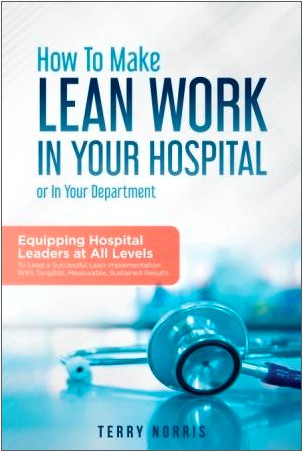
Adapted from leadership insights in How to Make Lean Work in Your Hospital by Terry Norris. While originally written for healthcare, these lessons apply universally across industries.
Beyond leadership absence itself, three leadership realities consistently determine whether Lean succeeds or fails:
Leaders Must Lead by Example
Successful Lean transformations begin with leaders who model the behaviors they expect, including attending daily huddles, following Standard Work, supporting improvement events, and remaining visibly committed beyond early wins.
Lean Requires Changing Work Habits, Not Just Processes
Lean ultimately succeeds or fails based on whether leaders can help people change day-to-day work habits. Without direct leadership involvement long enough for new behaviors to become the norm, sustainable improvement does not take hold.
Resistance Is Normal and Must Be Expected
Resistance to changing work habits is natural at all organizational levels. Effective Lean leaders anticipate resistance, coach through it, and persist rather than retreat.
Lean consulting services help organizations avoid these failure modes by aligning leadership behaviors, management systems to include change management, and execution, turning Lean from a short-lived initiative into a sustainable way of working.
Lean Tools That Actually Work
Effective Lean consulting engagements consistently focus on a small number of high-impact tools:
Value stream mapping to expose delays, rework, and constraints
A3 problem solving to build structured thinking and accountability
Standard Work to create stability and repeatability
Daily management systems to surface and solve problems early
These tools drive results when supported by leadership commitment and disciplined follow-through.
When Should You Use a Lean Consultant?
Organizations often reach a point where Lean progress slows, not because Lean is the wrong approach, but because speed, focus, and consistency become difficult to maintain internally.
Lean consulting can add significant value when:
Improvement efforts have stalled or plateaued
Results vary widely across departments or sites
Leaders lack a shared understanding of Lean as a management system
Internal teams are too close to the work to see systemic issues
There is pressure to improve faster without increasing risk
An experienced Lean consultant brings an external perspective, proven patterns, and disciplined execution. This often compresses years of trial and error into months, helping organizations avoid common pitfalls and sustain gains.
When applied well, Lean consulting is not an added cost; it is an accelerator. Many organizations experience returns that far exceed the investment as improvements compound across cost, quality, delivery, and engagement.
Lean consultants accelerate results while transferring knowledge and capability to internal teams. In complex organizations, the cost of moving slowly often exceeds the cost of external expertise.
Recommended Lean Tools and Resources
Organizations often support their Lean journey with:
Hiring a Lean consultant
Lean books and reference guides
Online Lean training platforms
Lean certification programs
Process mapping and collaboration software
Select tools that emphasize practical application and measurable outcomes.
Lean Consulting Resource Hub
This article anchors the Lean Consulting Works knowledge hub. Explore related guides:
Lean vs. Six Sigma: Which Is Better for Healthcare?
Lean Certification Explained: Bronze vs. Silver vs. Black Belt
Value Stream Mapping: A Step-by-Step Guide
Lean in the Public Sector: Challenges and Solutions
How to Choose the Right Lean Consultant
Final Thoughts
Lean consulting is not about working harder, deploying more tools, or launching another improvement project. Lean is a leadership-led, system-wide strategy for achieving excellence by creating value, eliminating waste, stabilizing processes, and respecting people.
Organizations that treat Lean as a project, something delegated to a department or run alongside other initiatives, rarely sustain results. In contrast, organizations that embed Lean into strategy and leadership behaviors create alignment, accountability, and continuous performance improvement.
When applied correctly, Lean consulting delivers measurable improvements in cost, quality, delivery, and morale, while building long-term organizational capability.
About the Author
Terry Norris, MBA, is a Lean Master Black Belt and author of How to Make Lean Work in Your Hospital. With over 20 years of experience leading Lean transformations across industries, he brings experience from both senior leadership and consulting perspectives, helping organizations implement Lean as a leadership-driven, system-wide strategy.